Deepfakes and AI Scams:
How Criminals Are Using Artificial Intelligence to Trick Victims
Artificial intelligence has quickly become part of everyday life. AI tools can help write emails, answer questions, create images, and even generate realistic voices and videos. Many of these technologies have legitimate and beneficial uses. Unfortunately, criminals are also taking advantage of these tools to create new ways to scam innocent victims.
Scammers are increasingly using artificial intelligence to create convincing messages, fake voices, realistic photographs, and even videos that appear to show real people saying things they never actually said. These deceptive creations are often called “deepfakes,” and they are becoming a powerful tool for fraud.
As AI technology continues to improve, it’s becoming more important than ever for Tucson residents to understand how these scams work and how to protect themselves.
What Is a Deepfake?
A deepfake is a piece of audio, video, or imagery that has been created or altered using artificial intelligence to make it appear authentic.
In some cases, AI can generate a realistic image of a person who does not exist. In others, it can clone a person’s voice using only a short audio sample. More advanced tools can create videos that make it appear as though someone said or did something that never actually happened.
The technology itself is not illegal. Many businesses, educators, and content creators use AI tools responsibly. Problems arise when criminals use these tools to deceive people for financial gain.
Why Are AI Scams Becoming More Common?
For years, scammers relied on poorly written emails and suspicious phone calls. Those scams often contained obvious warning signs — artificial intelligence is changing that.
AI can now generate convincing messages without spelling mistakes. It can imitate human conversation and create realistic voices that sound remarkably authentic. This allows criminals to build trust more quickly and make their scams appear more legitimate.
As the technology becomes more accessible, creating convincing fake content requires less time, less money, and less technical expertise than ever before.
The Grandparent Scam Gets an AI Upgrade
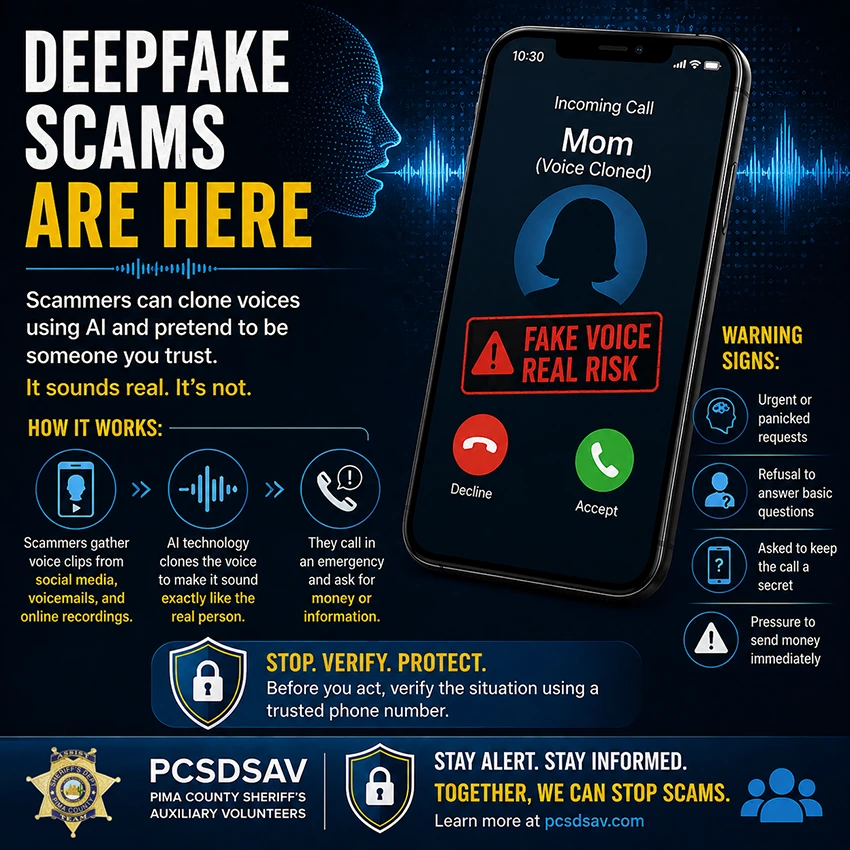
One of the most alarming trends involves voice-cloning technology. Imagine receiving a late-night phone call from someone who sounds exactly like your grandchild. The caller claims they have been arrested, involved in an accident, or stranded while traveling. They urgently need money and beg you not to tell anyone.
Years ago, criminals had to rely on acting skills to make these calls believable. Today, artificial intelligence can replicate a person’s voice with surprising accuracy. A short audio clip taken from social media videos, online recordings, or other public sources may provide enough material to create a convincing imitation. The goal is to trigger an emotional response before the victim has time to verify the situation.
Common AI-Powered Scams
Artificial intelligence is now being incorporated into many different types of fraud:
How Criminals Use Artificial Intelligence (AI) to Commit Scams
Scam Type |
How AI Is Used |
|---|---|
| Voice-Cloning Scam | Creates realistic voices of family members or friends. |
| Romance Scam | Generates fake photos and convincing conversations. |
| Business Impersonation Scam | Mimics executives, managers, or coworkers. |
| Investment Scam | Produces professional-looking videos and advertisements. |
| Social Media Fraud | Creates fake profiles and realistic online identities. |
| Phishing Scam | Writes convincing emails and text messages. |
How Can You Tell If Something Is a Deepfake?
Unfortunately, identifying deepfakes is becoming more difficult. Early versions often contained obvious flaws. Videos might show unnatural facial movements or audio that did not quite match the speaker’s lips. Modern AI tools continue to improve, making these errors less noticeable.
Instead of focusing solely on technical clues, it is often more effective to evaluate the situation itself.
Ask yourself whether the request makes sense. Is the person asking for money unexpectedly? Are they creating pressure to act immediately? Are they discouraging you from verifying their identity?
Scammers often rely on urgency because they do not want victims to take time to think critically.
What Should You Do If You Receive a Suspicious Call?
If someone claims to be a family member, friend, or coworker and requests money or sensitive information, pause before taking action. Hang up and contact the person directly using a phone number you already know is legitimate. Do not use contact information provided by the caller.
Many families are now establishing “safe words” or verification phrases that can be used during emergencies. A simple question known only to family members can quickly reveal whether a caller is genuine. A few moments spent verifying a story can prevent significant financial loss.
Social Media Makes These Scams Easier
Many people unknowingly provide scammers with the raw material needed to create convincing deepfakes. For example, videos posted on social media may contain voice samples. Public profiles often reveal family relationships, travel plans, workplaces, hobbies, and personal interests. Criminals can use this information to create highly personalized scams.
This does not mean you need to stop using social media. It does mean you should carefully consider what information is publicly visible and review privacy settings regularly.
Can AI Create Fake News and False Information? Absolutely.
Artificial intelligence can generate articles, images, videos, and social media posts that appear credible even when they are completely fabricated. This makes it increasingly important to verify information through trusted sources, especially when content provokes a strong emotional reaction or seems unusually shocking.
Before sharing a story online, consider checking whether reputable news organizations are reporting the same information. A healthy level of skepticism is becoming an essential digital safety skill.
How Can You Protect Yourself?
The most effective defense against AI scams is verification. If someone contacts you unexpectedly and requests money, sensitive information, or immediate action, take a step back and verify their identity independently. Be cautious of emotional appeals designed to create panic or urgency.
Use multi-factor authentication on important accounts. Keep software and devices updated. Review privacy settings on social media platforms and limit the amount of personal information available to the public. And most importantly, remember that hearing a familiar voice or seeing a convincing image is no longer proof that something is genuine.
What Should You Do If You Think You Have Been Targeted?
If you believe you may have been the victim of an AI-powered scam, act quickly.
- Contact your financial institution if money or payment information was involved.
- Change passwords for any accounts that may have been compromised.
- Save copies of messages, emails, recordings, or screenshots that could help investigators.
- If the scam involved impersonation of a family member or friend, notify them as well so they can take steps to protect themselves and others.
Reporting suspicious activity may help prevent additional victims from being targeted.
Trust, But Verify
Artificial intelligence is transforming the way people communicate, work, and access information. While these technologies offer many benefits, they are also creating new opportunities for criminals.
The days when scams were easy to spot are quickly disappearing. A convincing voice, a realistic photograph, or a professional-looking video should no longer be accepted at face value.
The best defense is taking a moment to verify before acting.
Whether the request comes through a phone call, text message, email, or social media platform, slowing down and confirming the facts can help protect you, your finances, and your family from becoming the next target of an AI-powered scam.