Online Romance Scams:
When Love Turns into Fraud
Meeting people online has become a normal part of modern life. Dating apps, social media platforms, online communities, and even professional networking sites have made it easier than ever to connect with people from around the world. While many online relationships are genuine, scammers have learned how to exploit the emotional connections people form in online platforms like Instagram and Facebook. Criminals create fake identities and build trust over time, to manipulate victims into sending money, sharing personal information, or becoming involved in financial schemes. These crimes are known as romance scams, and they continue to cost Americans millions of dollars each year. It’s important to understand how these scams work so you and your loved ones can recognize warning signs before becoming victims.
What Is a Romance Scam?
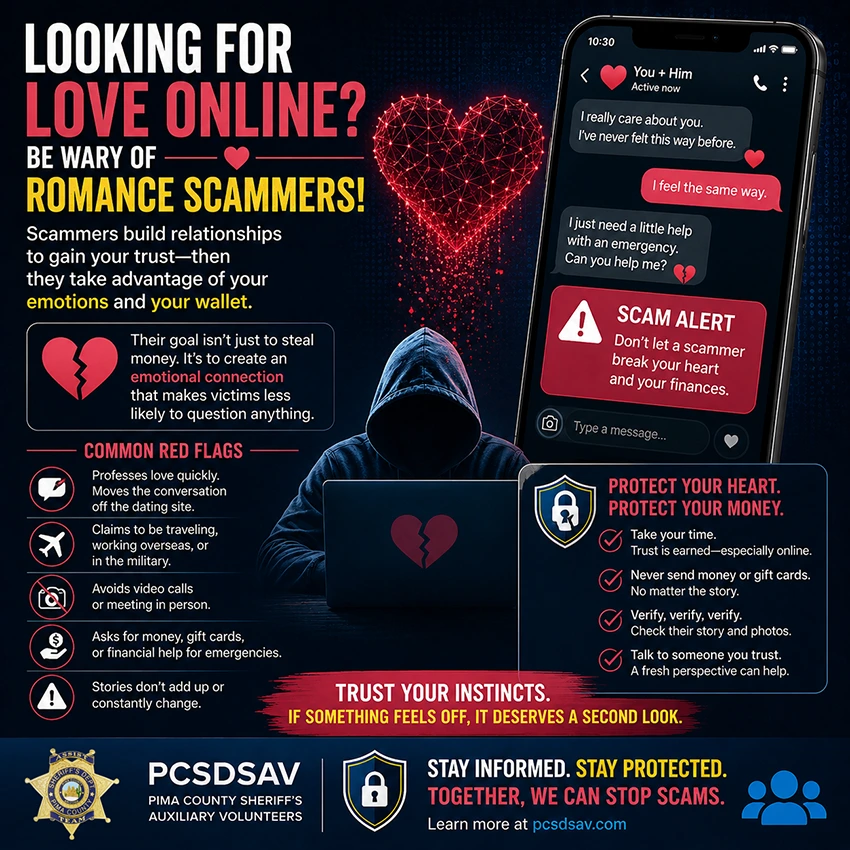
A romance scam occurs when a criminal creates a fake online identity and develops a relationship with someone for the purpose of financial gain. Unlike many scams that rely on urgency or fear, romance scams often move slowly. The scammer may spend weeks or even months communicating with a victim to build trust, create an emotional connection, and establish what appears to be a genuine relationship. Eventually, the conversation turns toward a problem that requires money.
The scammer may claim they need help with medical bills, travel expenses, military deployment issues, business investments, or family emergencies. By that point, victims often feel emotionally invested and want to help someone they believe cares about them. Unfortunately, the entire relationship is usually based on deception.
How Do Romance Scammers Find Victims?
Romance scammers can be found almost anywhere people interact online. Many use dating websites and mobile dating applications, but they also operate through social media platforms, online forums, gaming communities, and messaging applications.
Some scammers send friend requests to hundreds of people at a time, hoping someone will respond. Others carefully study profiles and target individuals based on age, interests, relationship status, or life circumstances. The goal is not simply to start a conversation. The goal is to identify someone who may be receptive to forming a connection.
Why Are Romance Scams So Effective?
Many people wonder how someone could fall for a romance scam. The answer is simple: these scams are designed to manipulate emotions rather than logic. The scammer often becomes a constant presence in the victim’s daily life. They send messages throughout the day, offer encouragement, provide compliments, and create a genuine sense of companionship. Over time, the relationship begins to feel real.
Because trust develops gradually, victims may overlook warning signs they would otherwise recognize. By the time money is requested, the scammer may feel like a close friend, romantic partner, or even a future spouse. This emotional connection is what makes romance scams particularly devastating.
Common Warning Signs of a Romance Scam
Although every situation is different, many romance scams share similar patterns:
Warning Signs of a Romance Scam
Warning Sign |
Why It Matters |
|---|---|
| Relationship moves very quickly | Scammers often push for emotional commitment early. |
| Refuses to meet in person | There is always an excuse for why they cannot visit. |
| Avoids video calls | The person may not match the photos being used. |
| Claims to work overseas | Difficult to verify their identity or location. |
| Requests money | This is the most significant red flag. |
| Asks for gift cards, cryptocurrency, or wire transfers | These payment methods are extremely difficult to recover. |
| Creates repeated emergencies | New financial crises appear whenever questions begin to arise. |
While one of these signs alone may not indicate fraud, multiple warning signs should raise concern.
The Most Common Stories Scammers Use
Romance scammers are skilled storytellers and are very patient. Their explanations often sound believable because they are designed to create sympathy and urgency. A scammer may claim to be serving in the military overseas and unable to access funds. Another may say they are working on an oil platform, traveling internationally for business, or completing a special government assignment. Some claim they need help paying for medical treatment. Others say they need money to purchase a plane ticket so they can finally meet in person.
The details vary, but the objective remains the same: convincing someone to send money.
What Happens After Money Is Sent?
Many victims hope that sending a small amount of money will solve the problem and allow the relationship to continue. Unfortunately, the first payment is often just the beginning.
Once a scammer believes a victim is willing to provide financial assistance, additional requests usually follow. New emergencies arise. Unexpected expenses appear. Promises of repayment are delayed.
Some victims lose hundreds of dollars. Others lose thousands. In severe cases, individuals have lost retirement savings, home equity, or life savings before realizing they have been deceived.
Can Younger People Fall Victim to Romance Scams? Absolutely.
While older adults are often targeted because they may have greater financial resources, romance scams affect people of all ages. Young adults, professionals, widows, widowers, and divorced individuals have all been victimized.
Scammers adapt their stories to fit different audiences. A younger person may encounter someone claiming to be an entrepreneur or investor. An older victim may be approached by someone portraying themselves as a military officer or successful professional. No one is immune to manipulation.
How Can You Protect Yourself?
Take time to verify who you are communicating with. Be cautious if someone avoids video calls or refuses to meet in person after an extended period of communication. Consider conducting a reverse image search if profile photos seem unusually professional or appear too good to be true.
Most importantly, never send money to someone you have not met in person, regardless of how convincing their story may sound. The same caution should apply to requests involving gift cards, cryptocurrency, wire transfers, or access to financial accounts.
What Should You Do If You Suspect a Romance Scam?
If you believe you may be communicating with a scammer, stop sending money immediately. Save copies of messages, emails, photographs, and other communications. Block the individual on social media and messaging platforms. If financial information has been shared, contact your bank or financial institution as soon as possible.
Many victims feel embarrassed after discovering they have been targeted. It is important to remember that professional scammers are highly skilled manipulators who spend their entire careers learning how to gain people’s trust. Reporting the crime may also help prevent others from becoming victims.
Trust Your Instincts
Online relationships can lead to meaningful friendships and genuine connections. However, it is important to remember that not everyone online is who they claim to be. If an online relationship seems to be moving unusually fast, if the person constantly has reasons they cannot meet, or if conversations repeatedly lead to requests for money, take a step back and evaluate the situation carefully.
Romance scammers rely on emotional pressure and trust to succeed. By staying informed and remaining cautious, Tucson residents can better protect themselves and their loved ones from becoming victims. When it comes to online relationships, trust should be earned over time, and financial requests should always be treated as a serious warning sign.